Real
(evidence-based)
Food.
What the science actually says you should eat. A clear, visual guide to building a healthier diet.
Reproduced by Nutrition Scientist and host of The Proof podcast, Simon Hill, from the 2025 Dietary Guidelines Advisory Committee recommendations.
What a Healthy Day of Eating Looks Like
Based on a 2,000-calorie diet, here's how much of each food group you should aim for every day.
Have plenty of vegetables & fruits
Fill half your plate
Make water your drink of choice
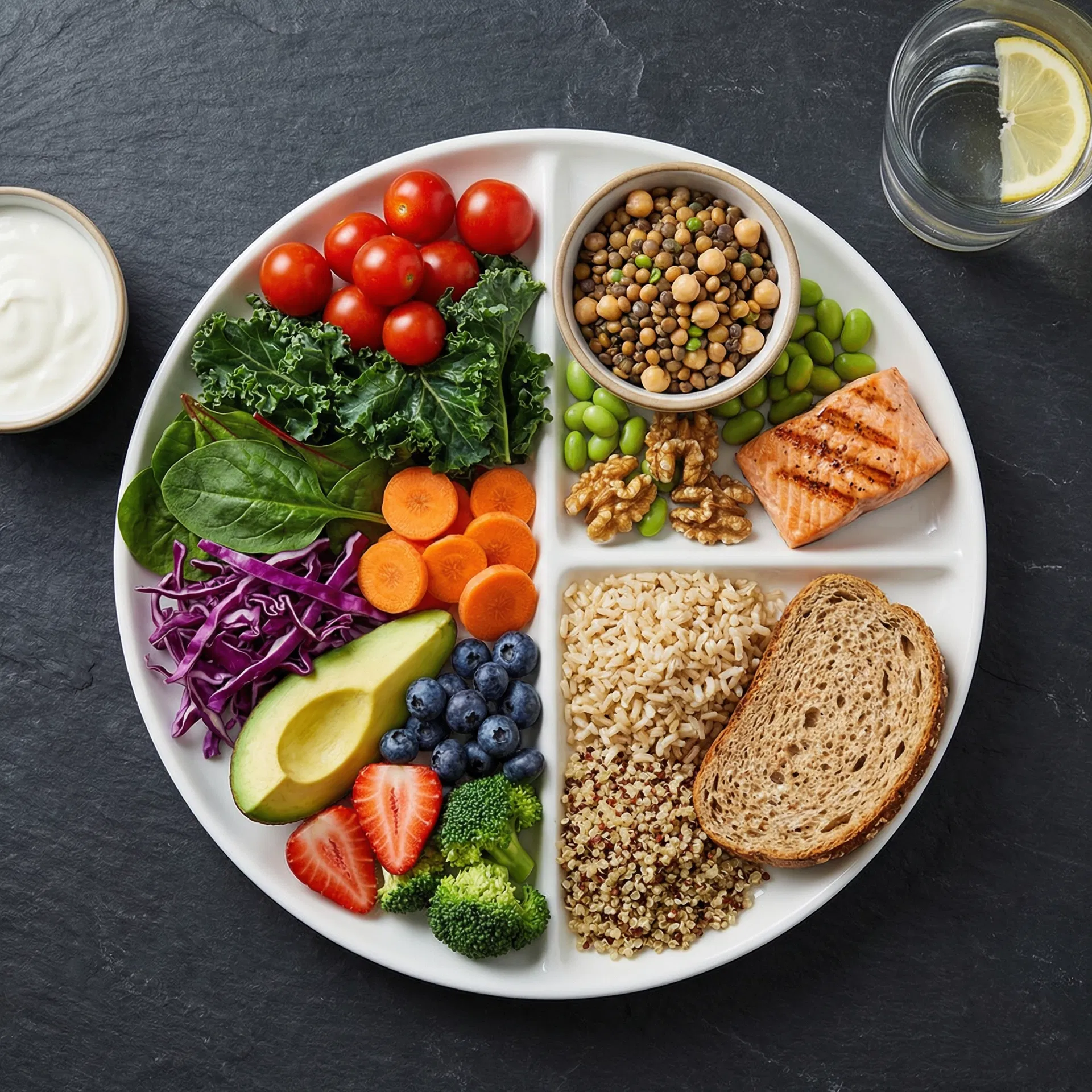
Eat protein foods
Emphasize: beans, lentils, nuts, seeds, soy & seafood
Also includes poultry, eggs & small amounts of red meat
Choose whole grains
Brown rice, quinoa, whole wheat
Dairy or Fortified Soy Alternatives
Milk, yogurt, cheese, or calcium-fortified soy beverages & yogurt
Weekly Protein Breakdown
Prioritise fish and plant-based proteins: The average American will benefit from eating more fish, beans, peas, and lentils, and nuts, seeds, and soy products and less meats, poultry and eggs.
Beans, Peas & Lentils
10 oz eq (280g)/week
Nuts, Seeds & Soy
4½ oz eq (130g)/week
Seafood
8 oz eq (225g)/week
Meats, Poultry & Eggs
26 oz eq (735g)/week
Based on a 2,000-calorie Healthy U.S.-Style Dietary Pattern. Individual needs may vary.
What to Eat More & Less Of
The simplest way to understand the guidelines: fill your plate with the foods in the 'Eat More' list, and cut back on the foods in the 'Eat Less' list.
Eat More
- 🥦
Vegetables of all types
Dark green, red & orange, beans, starchy
- 🍎
Whole fruits
Berries, citrus, apples — whole over juice
- 🫘
Beans, peas & lentils
Great source of protein and fiber
- 🥜
Nuts, seeds & soy
Almonds, walnuts, chia, tofu
- 🐟
Seafood & fish
Aim for 8 oz (225g) per week
- 🌾
Whole grains
Brown rice, oatmeal, quinoa, whole wheat
- 🫒
Healthy oils
Olive, canola, sunflower oils
- 🥬
Fermented foods
Kraut, kimchi, yogurt

Eat Less
- 🍬
Added sugars
Soda, candy, pastries, sweetened drinks
- 🥓
Red & processed meat
Bacon, sausage, hot dogs, deli meat
- 🍞
Refined grains
White bread, white pasta, white rice
- 🧈
Saturated fat
Butter, full-fat cheese, fatty cuts
- 🧂
Sodium / salt
Processed foods, canned soups, chips
- 🥤
Sugary beverages
Soda, energy drinks, sweetened coffee
- 🍷
Alcohol
If you drink, limit to 1/day max
4 Things to Keep in Check
Even with healthy choices, a good diet doesn't have much room for these. Stay under these daily limits.
Added Sugars
That's about 50g or 12 tsp for a 2,000-cal diet. None for children under 2.
Saturated Fat
Replace with unsaturated fats from plant sources like olive oil and nuts.
Sodium
That's about 1 teaspoon of salt — most Americans eat 50% more. Even less for kids under 14.
Alcohol
For both women and men. Less is better. Don't start drinking for health reasons.
Simple Swaps to Start Today
You don't have to overhaul your diet overnight. Start with one or two of these easy swaps and build from there.
Instead of
White bread & pasta
Try this
Whole wheat bread, brown rice, quinoa
Instead of
Sugary drinks & soda
Try this
Water, unsweetened tea, sparkling water
Instead of
Red & processed meat
Try this
Beans, lentils, tofu, fish
Instead of
Butter & cream
Try this
Olive oil, canola oil, sunflower oil, avocado, nut butter
Instead of
Salty snacks & chips
Try this
Unsalted nuts, fresh fruit, veggies & hummus
Instead of
Candy & pastries
Try this
Fresh fruit, yogurt with berries, dark chocolate
Nutrition Myths Debunked
Tap each myth to reveal what the science actually says.
The Complete Uncompromised Guidelines
Based on the 2025 Dietary Guidelines Advisory Committee's science-based recommendations.
Follow a Healthy Pattern at Every Life Stage
It's never too early or too late to eat healthfully. Choose foods that align with your cultural practices and dietary preferences at every stage of life.
- Breastfeed infants exclusively for about 6 months if possible
- Introduce nutrient-dense foods at about 6 months
- From age 1 through older adulthood, follow a healthy pattern
Customize to Your Preferences, Culture & Budget
A healthy diet benefits everyone regardless of background. The guidelines provide a flexible framework — healthy eating should bring joy and comfort.
- Adapt to your cultural traditions and foodways
- Work within your budget — healthy eating doesn't have to be expensive
- Food should bring joy and comfort, not just nourishment
Focus on Nutrient-Dense Foods & Under-Consumed Groups
Fill your plate with foods that provide vitamins, minerals, and health-promoting components with little added sugars, saturated fat, or sodium.
- Increase whole grains, decrease refined grains
- Increase beans, lentils, nuts, seeds — decrease red and processed meat
- Emphasize vitamin D, calcium, potassium, and dietary fiber
Limit Added Sugars, Saturated Fat, Sodium & Alcohol
A healthy diet doesn't have much room for extras. Our food supply is particularly high in sodium — check labels and choose lower-sodium options.
- Added sugars & saturated fat: each less than 10% of daily calories
- Sodium: less than 2,300 mg/day (even less for kids under 14)
- If you drink alcohol, limit to 1 drink/day — less is better
Prioritize Sustainable, Planet-Friendly Food Choices
Healthy diets can also support planetary health. Plant-based proteins often have lower environmental impact.
- Prioritize plant-based proteins like beans, lentils, nuts, and soy
- If you eat meat, limit red and processed meat
- Make tap water your primary beverage
- Minimize food waste and choose unpackaged whole foods
Eating Healthy Is Also
Eating Sustainably
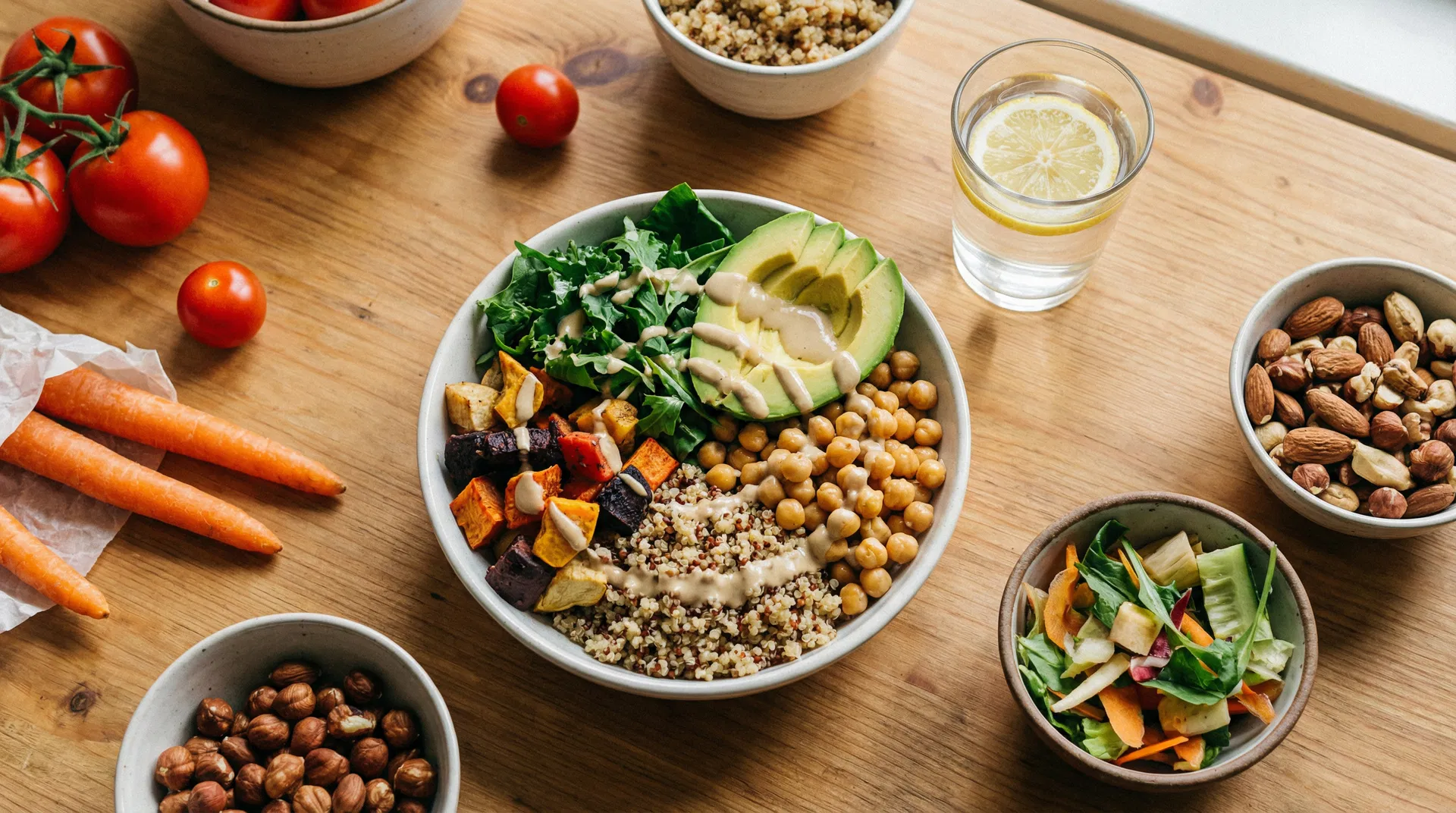
The healthy dietary pattern recommended by the science — more plants, less red meat — also happens to be better for the environment.
Prioritize plant-based proteins like beans, lentils, and nuts
Make tap water your primary beverage
Minimize food waste — plan meals, save leftovers, compost
Choose unpackaged, whole foods to reduce plastic waste
Under-Consumed Nutrients
Most Americans don't get enough of these essential nutrients. Make a point to include foods rich in them.
Vitamin D
Good sources: Fortified milk, fatty fish, egg yolks, sunlight
Calcium
Good sources: Dairy, fortified soy, leafy greens, tofu
Potassium
Good sources: Bananas, potatoes, beans, spinach, yogurt
Dietary Fiber
Good sources: Whole grains, beans, vegetables, fruits, nuts
A Note on Protein & Muscle Mass
The average American consumes 1.2g of protein per kg of body weight, which is enough to support healthy muscle mass as you age.
The reason many Americans are experiencing accentuated muscle loss is not because of insufficient protein — it's because they are not doing the recommended 30–60 minutes of resistance training at least twice per week.
Adequate protein + regular resistance training = the real formula for maintaining muscle mass throughout life.
Plant-Based Dietary Patterns
Plant-based dietary patterns such as vegetarian and vegan are associated with better cardiometabolic risk factors and lower risk of developing diseases such as heart disease, stroke and type 2 diabetes.
Important: When consuming such diets, it is important to supplement with Vitamin B12 and to ensure optimal intake of iodine, selenium, zinc, calcium and omega-3's (DHA + EPA) through food and/or supplement sources.
A Note on Alcohol
The science is clear: do not start drinking for health reasons. If you do drink, at all levels of consumption, drinking less is generally better for health than drinking more. The recommended limit is up to 1 drink per day for both women and men — down from the previous guideline of 2 drinks for men.
Based on the 2020 DGAC recommendations, the most recent uncompromised, evidence-based review of alcohol and health.